There are many Bible-reading methods. In this article, we’ll talk about Bible verse mapping and how it can transform your Bible reading from a duty into an adventure.
Let’s dive in.
What is Bible verse mapping?
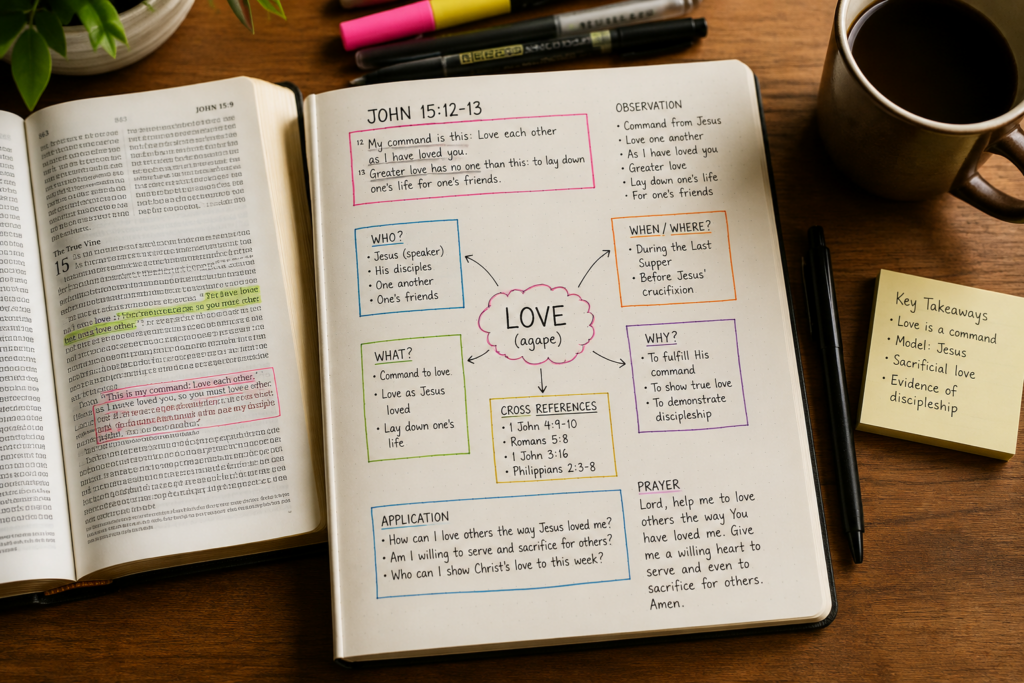
Bible verse mapping is a Bible study method that entails slowing down and examining a verse or a short passage closely.
Rather than simply reading a verse normally and moving on, you pause and go deeper. The deeper interrogation involves:
- Looking up definitions, meaning, and etymology.
- Studying the context of the text.
- Finding cross-references.
- Identifying important words and phrases.
- Exploring the meaning in the original language.
- Observing what the passage teaches about God.
- Drawing practical applications.
That is foundational if we are to read the Bible as God designed it and apply it correctly. God calls us not just to read the Bible but to meditate on it (Joshua 1:8, Psalm 1:2). That is only possible when we slow down and ponder the text deeply.
But that’s cumbersome, someone might say. Well, it is hard work but worth every effort. Here is why.
Why is Bible verse mapping important?

Whether you’re a new believer trying to make sense of Scripture or a mature Christian seeking fresh passion for Bible study, Bible verse mapping offers a practical path to consistent Bible reading. For a couple of reasons.
1. It helps you understand Scripture deeply
Many Bible verses contain layers of meaning that aren’t immediately obvious. Whether it be a root word that changes the theological trajectory, a promise rooted in a larger biblical theme, meaning wrapped up in the context, or a phrase that connects to events hundreds of years earlier or later, you name it, such details can be hidden in plain sight.
If you read too fast, you might miss those important details. Verse mapping Bible study slows you down enough to notice those details.
This fosters a deeper understanding of the text.
Otherwise, in reading too fast, you risk jumping straight from reading to application, yet without the necessary materials to make the correct application. This might lead to misapplication or even abuse of the Word.
2. Improves Bible retention
Active reading has been singled out as one of the great Bible retention hacks. Bible verse mapping, which is one of the pillars of inductive Bible study, helps the reader do just that.
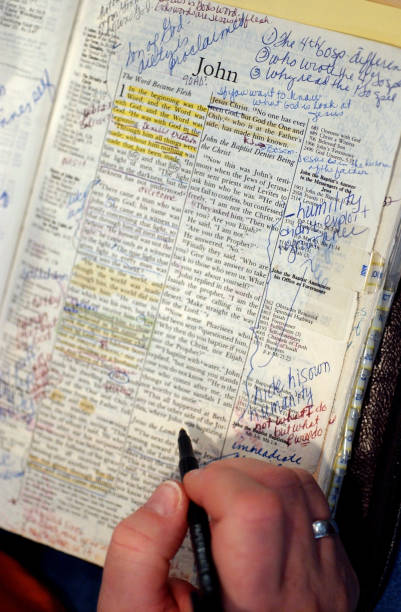
Verse mapping involves writing, researching, highlighting, comparing, and reflecting. These are the elements of active Bible reading which involve the mind, spirit, and heart, producing lasting retention.
Do you find yourself forgetting what you read five minutes after finishing your devotion? Maybe it is time to adopt Bible verse mapping.
3. Makes devotion time more engaging
Sometimes Bible reading feels repetitive and boring, especially when you are always skimming through the texts without giving them much thought.
Verse mapping introduces curiosity back into your study time. When you take a closer look, every verse becomes a treasure hunt. And every observation becomes a discovery.
If your quiet time has felt boring lately, the Bible mapping method is the way to go. It is one of the most engaging ways to study the Bible.
4. Helps connect Scripture
One of the greatest dangers of shallow Bible reading is viewing passages in isolation. It’s easy to focus only on the verse or chapter in front of you and forget that it is part of a much larger story.
The Bible is not a collection of disconnected books or random teachings. It is one unified story of God’s redemptive plan through Jesus Christ, unfolding across all 66 books of Scripture.
Because of this, every passage is connected to the larger narrative in some way. As you practice Bible verse mapping, you’ll begin to notice those connections. Themes repeat, promises unfold, prophecies find their fulfilment, and biblical truths build upon one another.
Gradually, the Bible starts to make sense not just as individual books but as one coherent, beautifully interconnected story.
5. Produces spiritual maturity
Many believers depend heavily on pastors, Bible teachers, podcasts, devotionals, and Christian books to understand Scripture. There’s nothing necessarily wrong with that, for it is God who Has equipped the five-fold ministers to build up the body of Christ (Ephesians 4:11-13).
The problem arises when those resources become a substitute for personal Bible study rather than a supplement to it.
Over time, it’s possible to become so accustomed to hearing what others say about Scripture that you begin to doubt your ability to study it for yourself. Instead of finding answers for yourself in the Bible, you may find yourself thinking, I need to hear a certain pastor explain this passage.
This is where Bible verse mapping becomes incredibly valuable.
Rather than passively receiving information, verse mapping teaches you how to engage with Scripture actively. You learn to ask thoughtful questions, observe details, trace themes, examine context, compare cross-references, and follow the flow of the biblical author’s argument.
Over time, you will become increasingly familiar with God’s voice as He speaks through His Word. You will outgrow the infancy dependency (Hebrews 5:11-6:3) and become a good, approved worker who correctly handles the Word of truth (2 Timothy 2:15).
Also, you grow confident in your relationship with God as you get to know Him more and more in the Scripture.
These are the marks of spiritual maturity.
Having seen why Bible verse mapping is so valuable, let’s get practical and look at exactly how to do it.
Step-by-step guide on how to map a verse

The good news is that Bible verse mapping does not require expensive tools or years of Bible study experience. All you need is a Bible, a notebook, a curious mind, and a willing heart.
Let’s now discuss the process.
Step 1: Choose a verse to map
Pick one verse or a short passage. Don’t try to map an entire chapter at once, you will overwhelm yourself. A single verse has more than enough depth to explore.
The goal is depth, not speed, remember?
Step 2: Write it
Copy the verse word-for-word in your notebook. This simple act of physically writing slows your brain down and primes you for deeper engagement.
As you write, highlight key words and phrases. You will be amazed that the words you might normally skim suddenly become visible.
Step 3: Paraphrase it.
Rewrite the verse in your own words, as if explaining it to a friend over coffee. This reveals what you actually understand and exposes what you don’t yet.
Step 4: Define important words
This is where Bible mapping becomes especially rewarding. Many biblical words carry richer meanings than we initially assume. Start with getting to what the words really mean in English (or any other language you are using).
Take it a step further and explore the original Greek or Hebrew meanings. You’ll often find that one word carries a richness that English translations can’t fully capture.
Concordance, Bible dictionaries and study Bibles come in handy here.
Step 5: Examine the context

This is where many mistakes in Bible interpretation and application often occur. If you dont stop to examine the context, it is easy to pull a verse out of its setting and assign it a meaning God never intended.
So, pause, ask yourself: Who wrote this? To whom? What was happening?
Take it further and examine what comes before and after the verse. Sometimes, the surrounding verses answer questions immediately. You can also look at the context of a given verse in terms of what the chapter or the entire book is teaching.
A quick commentary or a study Bible helps here.
Step 6: Find cross-references
Next, consider what other Scriptures speak to this same truth. As you look, you will be amazed at how many other texts in the Old and New Testaments might be related to the text you are reading.
Why is that important? Letting Scripture interpret Scripture is the most reliable method of Bible interpretation, as it allows the Bible to speak for itself.
Leverage that by using your study Bible and other online resources to get the cross-references.
Step 7: Identify what it teaches about God
Many Bible studies become self-centered. We rush to ask, “What does this passage mean for me?” before we’ve even understood what it reveals about God.
Here’s the reality: although the Bible was written for your benefit, it is not primarily about you. It is God’s book. It tells the story of who He is, what He has done, and how He is redeeming a people for Himself through Jesus Christ.
As such, before asking, “What does this mean for me?” ask, “What does this teach me about God?”
That’s the better starting point. When you understand God rightly, you’ll be in a much better position to understand what the passage means for your life.
Scripture is first and foremost God’s revelation of Himself. When studying the verse, look for truths about: God’s character, holiness, love, justice, wisdom, faithfulness, power, and His other attributes.
The better you know God, the better you understand everything else in Scripture.
Step 8: Write your personal application
After you have asked, observed and interpreted the text, and asked “What does this teach me about God?”, you can now ask: “What does this mean for me?” You are now ready to apply the text.
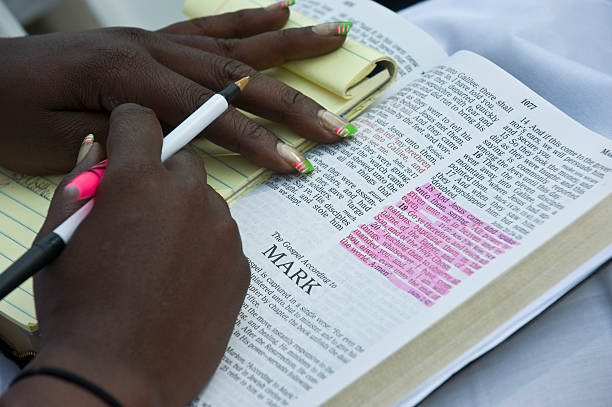
Is there a command to obey? Is there a promise to trust? Write it. Has God convicted you of a certain sin? Take note of it. Is there a truth to believe? Go ahead and highlight. Application is deeply personal.
And it does not end on paper. Bible verse mapping is only valuable if it leads to action. Like preparing a meal and never eating it, studying Scripture without obeying it defeats the purpose.
So, after you have noted whatever you sense God is leading you to do, proactively take measures to obey and trust Him to help you to do it without delay.
Again, dont skip this step. Application gives birth to transformation by turning the text into a lived reality of growing in Christlikeness.
Step 9: Pray it in
Finally, respond to the truths you have discovered in prayer. Thank God for revealing Himself to you through His Word. Pray that the Word will find a home in you and bear fruit.
Talking of bearing fruit, remember you cannot obey by your own strength. Lean on God in prayer and petition Him to give you the strength to obey and live in the reality of the truth you have learned.
As you do your Bible verse mapping, watch out for these pitfalls:
Common mistakes to avoid
Here are a few things that can quietly derail your Scripture mapping:
i. Mapping too many verses at once
This would be the quickest way to get overwhelmed and quit. One verse, done well, beats five verses done hastily.
ii. Rushing through the process
Remember, the goal of Bible verse mapping is to slow down your Bible reading. Do just that and milk the juice out of the text.
iii. Obsession with the esoteric
Friend, verse mapping is not about uncovering secret codes to impress. It’s about understanding what God has revealed more clearly. Dont look for hidden messages, look for Christ in the text.
True is the old saying: if it is true, it is not new. If it is new, it is not true.
iv. Treating it as a checklist
There is a danger of making verse mapping an academic exercise. If it starts feeling like an obligation, pause and ask God to renew your hunger for His Word.
v. Comparing your maps to other people

Social media is full of beautifully decorated verse maps. Don’t blindly copy other people’s experiences, this is a deeply personal journey.
vi. Neglecting prayer
Dont go about it alone. Ask the Holy Spirit to illuminate Scripture and help you apply it faithfully.
Ready to get started with Bible verse mapping?
Do you struggle to remember what you have read in the Bible? Or come across a verse that left you with more questions than answers? Do you desire to understand the Bible better and grow in your walk of faith?
If so, Bible verse mapping may be exactly what you need. This Bible study method helps you slow down, dig deeper into Scripture, and uncover insights you might otherwise miss. As your understanding grows, so does your ability to apply God’s truth accurately and confidently.
Get started today. All you need is your Bible, your notebook, and a willing heart. Pick a verse right now and create your first verse map. Start small and stay consistent.

You can also read: